We collect basic website visitor information on this website and store it in cookies. We also utilize Google Analytics to track page view information to assist us in improving our website.
Whole-Home Filtration
A whole-home filter system treats water where it enters the house, reducing chlorine taste, smell and sediment for showers, laundry and every faucet. What will be needed depends greatly on the water entering your home. Is it from a well or municipal water? What needs to be treated? What flow rates are required and available? We consider all of this and design a system that is right for you.
New Dundee, Wilmot Township, Kitchener, Waterloo, Cambridge, Guelph, Milton, Halton Hills, Acton, Rockwood and Georgetown
Which filter for which job?
Whole-home filtration improves water for everything: bathing, laundry, cleaning. Reverse osmosis goes further for drinking water at one tap. Many homes use both.
Call and ask. In the meantime, we can test your water.
Where it goes
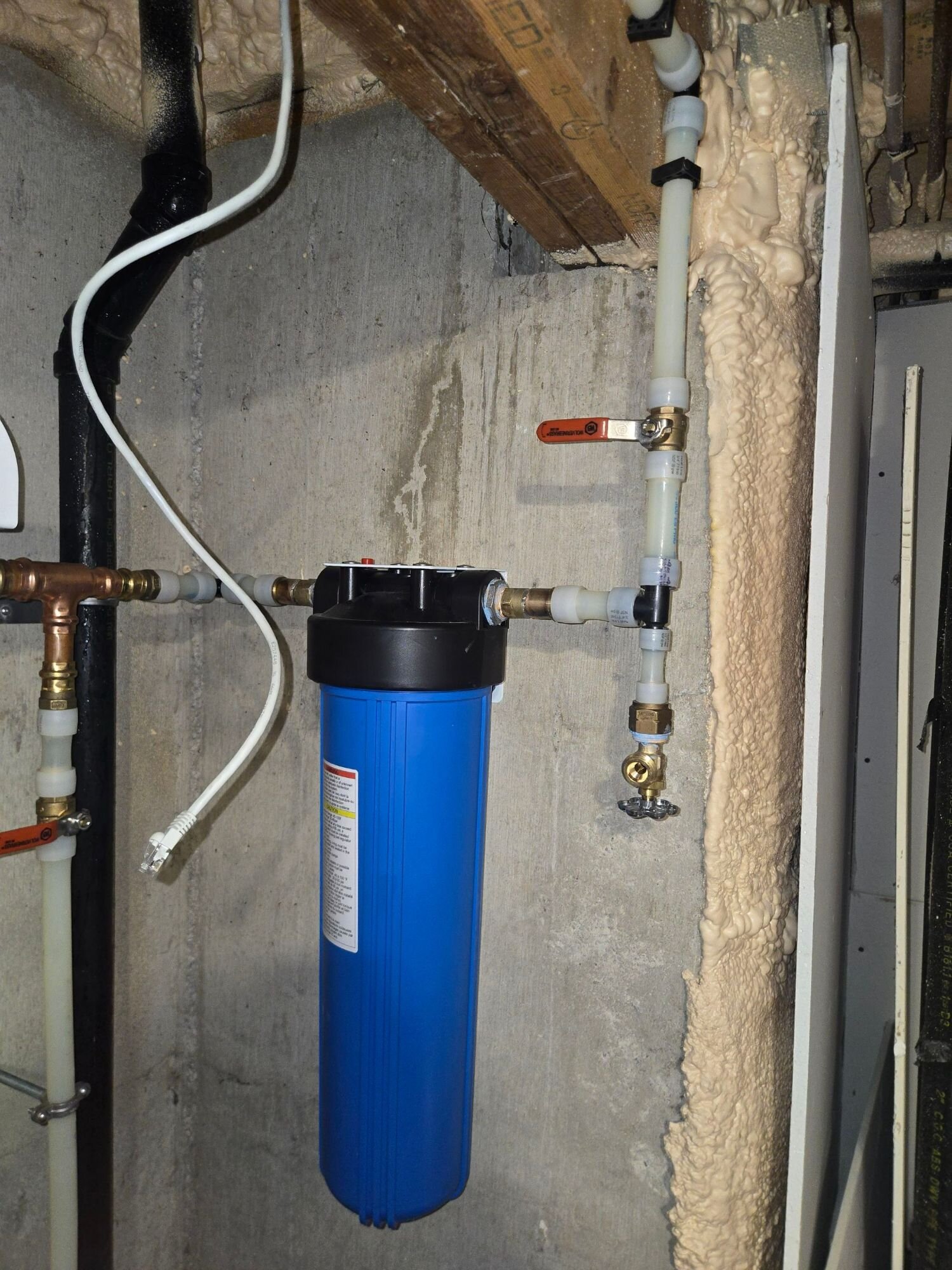
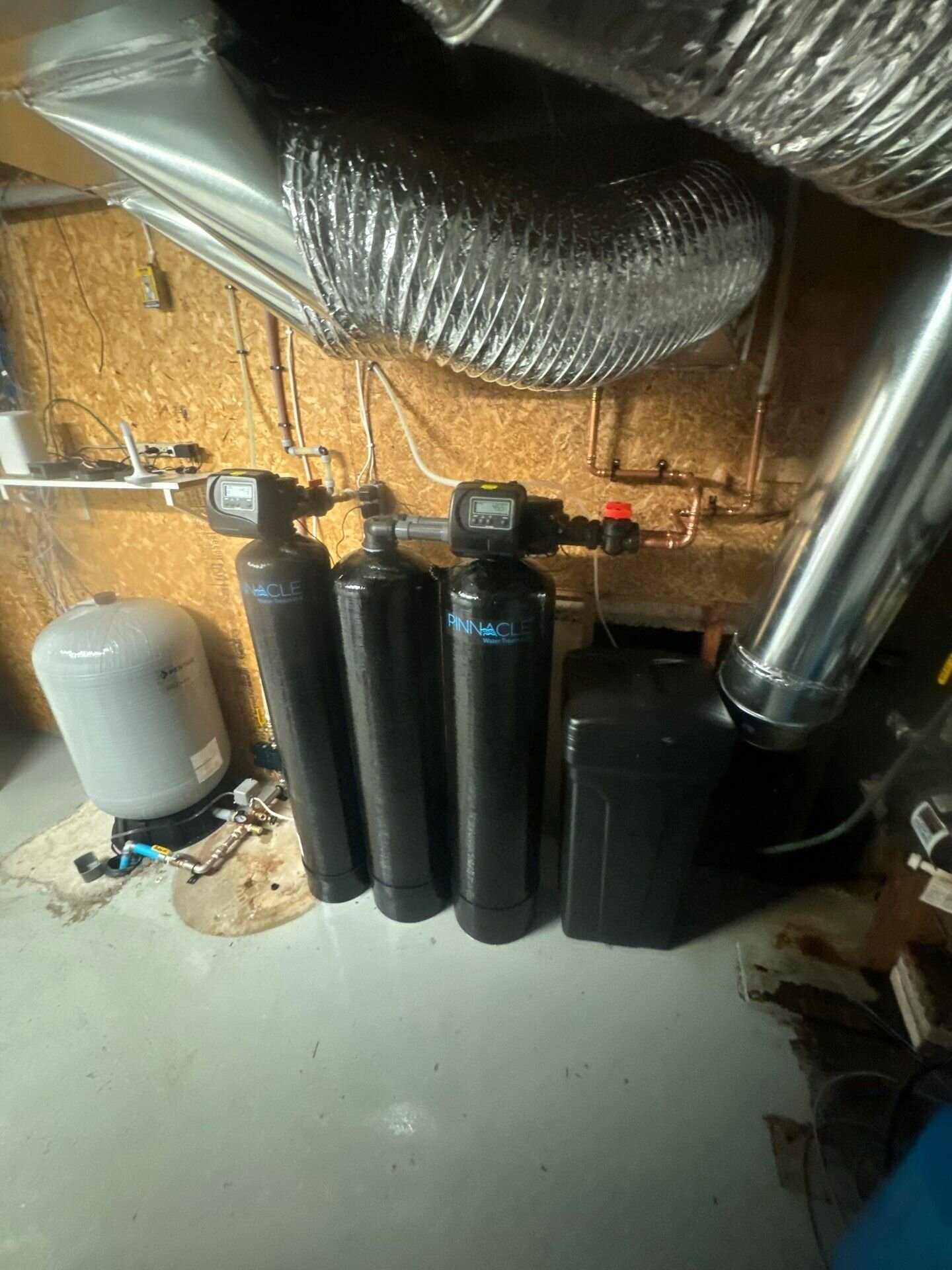
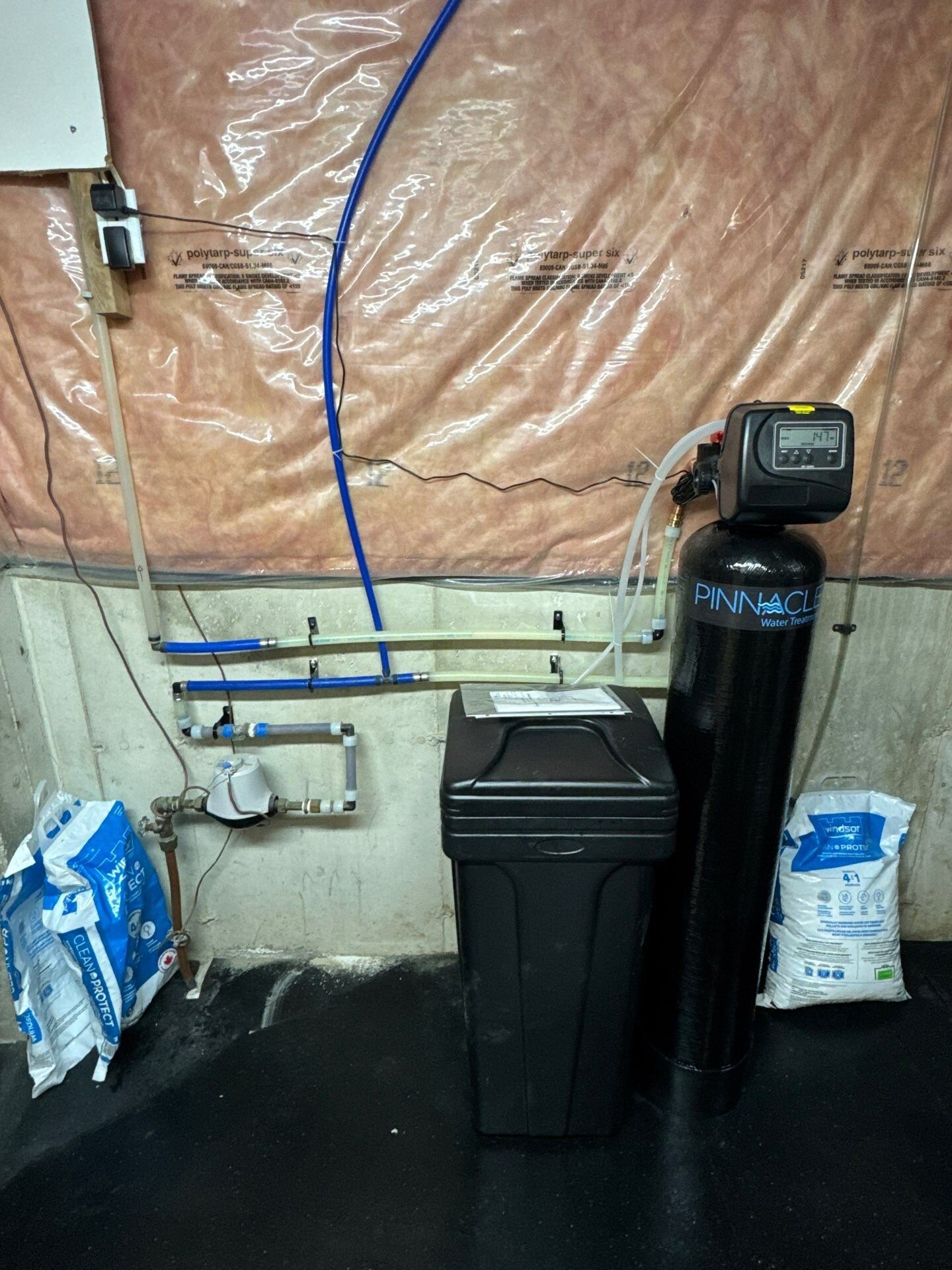
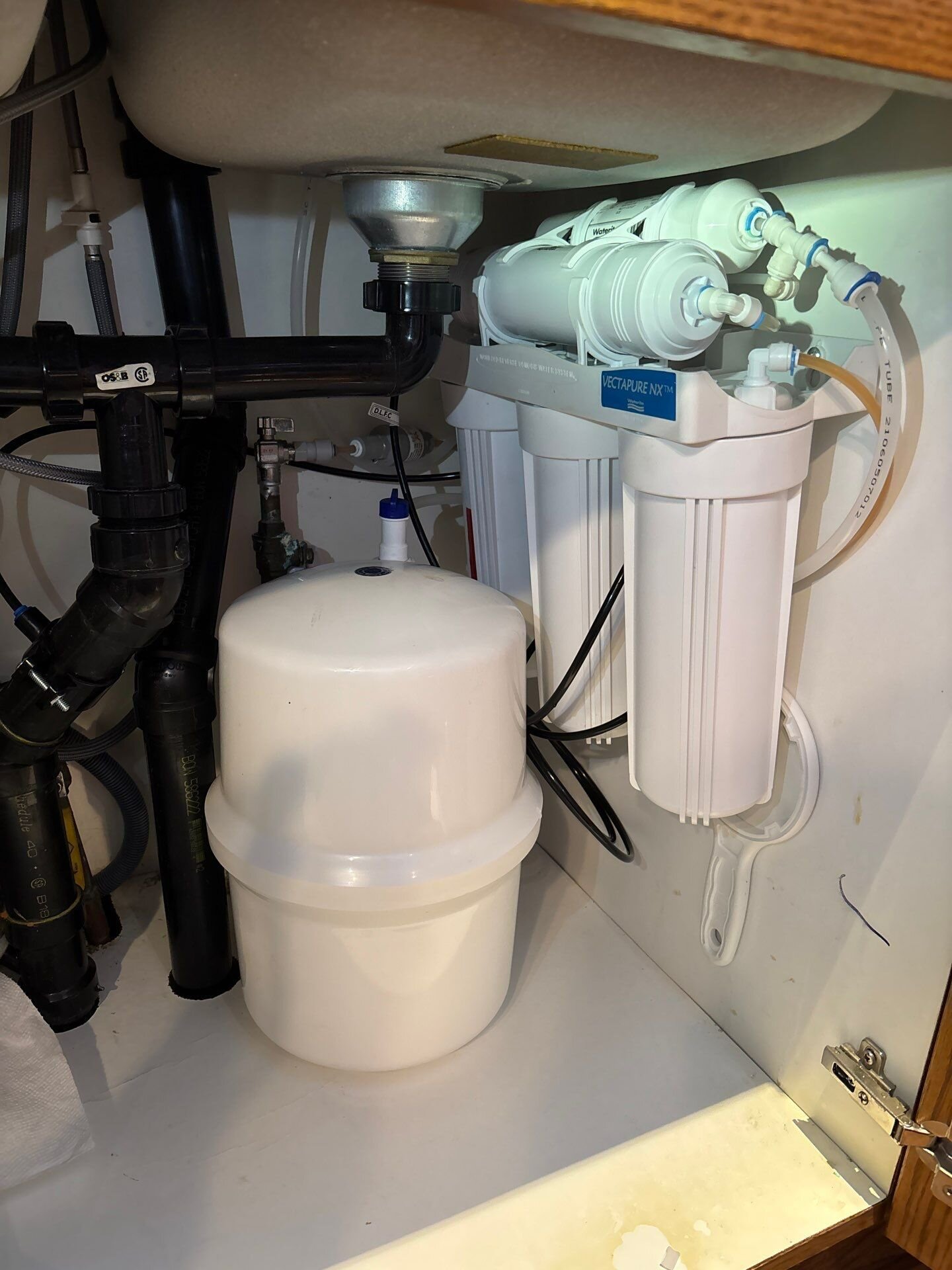
Real systems we’ve installed in Waterloo Region homes.
Showers, laundry and sinks all get filtered water.
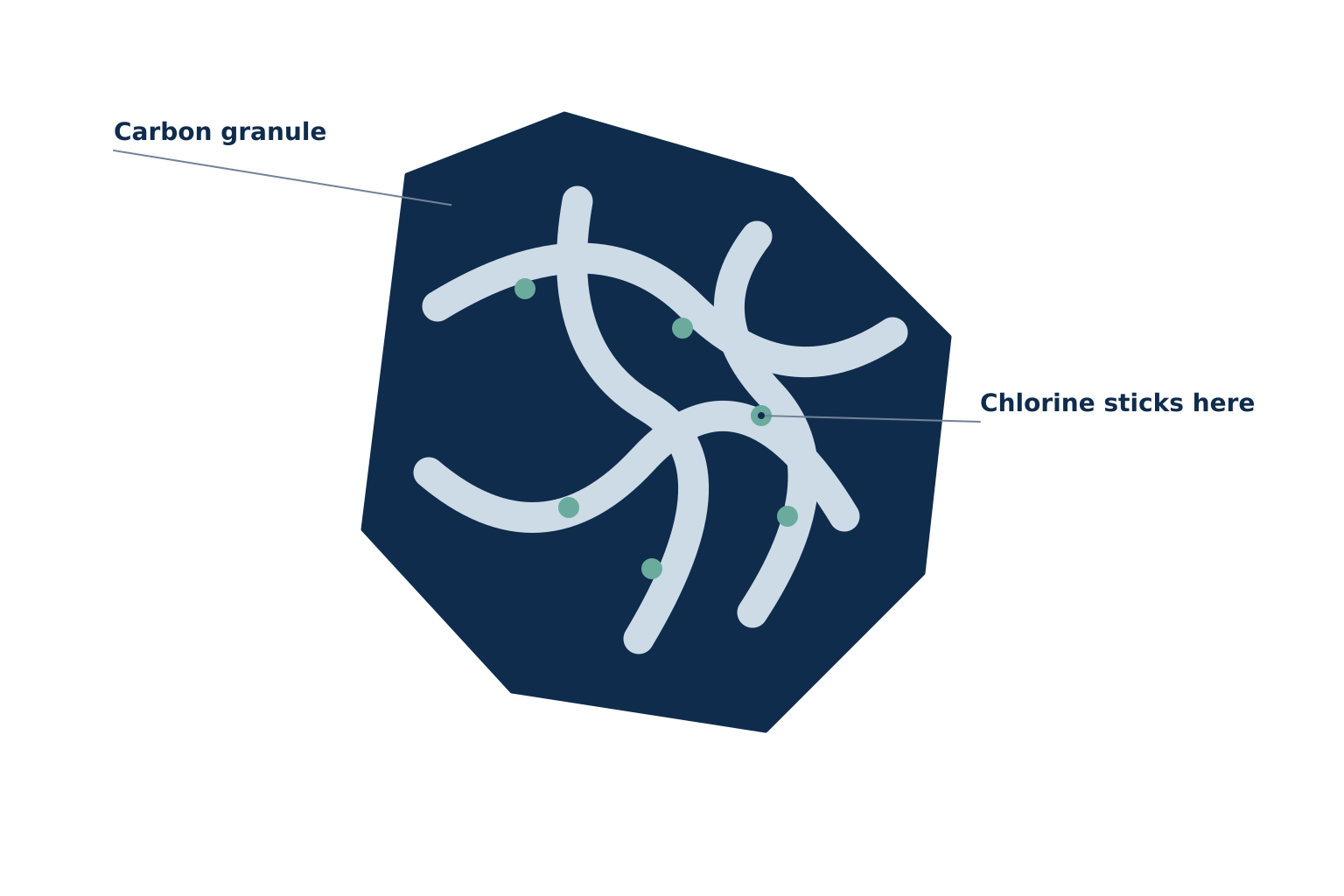
Reduced taste and smell from city water.
Protects fixtures and appliances.
Placed correctly with your softener.
Questions we get asked
RO covers drinking water at one tap. Whole-home filtration covers showers and everything else.
A whole-home carbon filter (about the size of a softener) usually lasts 5 to 10 years. A small point of use (4 inch x 10 inch) carbon filter lasts less than 1 year. How long depends on how much water your home uses and how much chlorine is in it.
Running water through any filter does. If sized properly, the result can be lessened.
It depends on what needs to come out of your water. On city water, it can be as simple as a sediment filter or a carbon filter for chlorine taste and smell, but can require removing hardness or other treatment. On well water, it can mean several pieces of equipment, such as an iron filter, a softener and UV, and sometimes a new pump and pressure tank. We test your water first, then give you a written price for only what your water needs.
From where the water enters your home: on a well, the pressure tank comes first, and nothing goes between the pump and the tank. Then a sediment filter, then an iron filter, then the softener, then a carbon filter for chlorine taste and smell, then UV. Reverse osmosis goes last, under the kitchen sink, for drinking water only. Each piece protects the one after it.
Iron coats the resin inside a softener and wears it out early. Taking the iron out first lets the softener do its one job, removing hardness, and helps it last.
UV light kills bacteria as water passes a lamp, but it only works through clear water. Sediment, iron and hardness can coat the lamp’s glass sleeve and shade bacteria from the light. Filtering and softening first keeps the UV working the way it should.
They shouldn’t. Both use water to rinse themselves, usually overnight. We set them a couple of hours apart, so each one gets the full flow it needs.
Whole-Home Filtration
Call us, and start with a water test.
 CALL US! 548-255-2662