Water Heater Rental vs Owning
Water heater rental in Kitchener-Waterloo looks cheap month to month. Here is the honest math on renting versus owning, when renting does make sense, and why hard water matters either way.
New Dundee, Wilmot Township, Kitchener, Waterloo, Cambridge, Guelph, Milton, Halton Hills, Acton, Rockwood and Georgetown
The math
Monthly rent is small, but it never stops, and it usually goes up every year. Here is what the rent adds up to, compared with buying the same type of water heater from us.
| Water heater | Typical rent per month | Rent paid over 5 years | Over 8 years | Over 12 years | Buy it from us, installed |
|---|---|---|---|---|---|
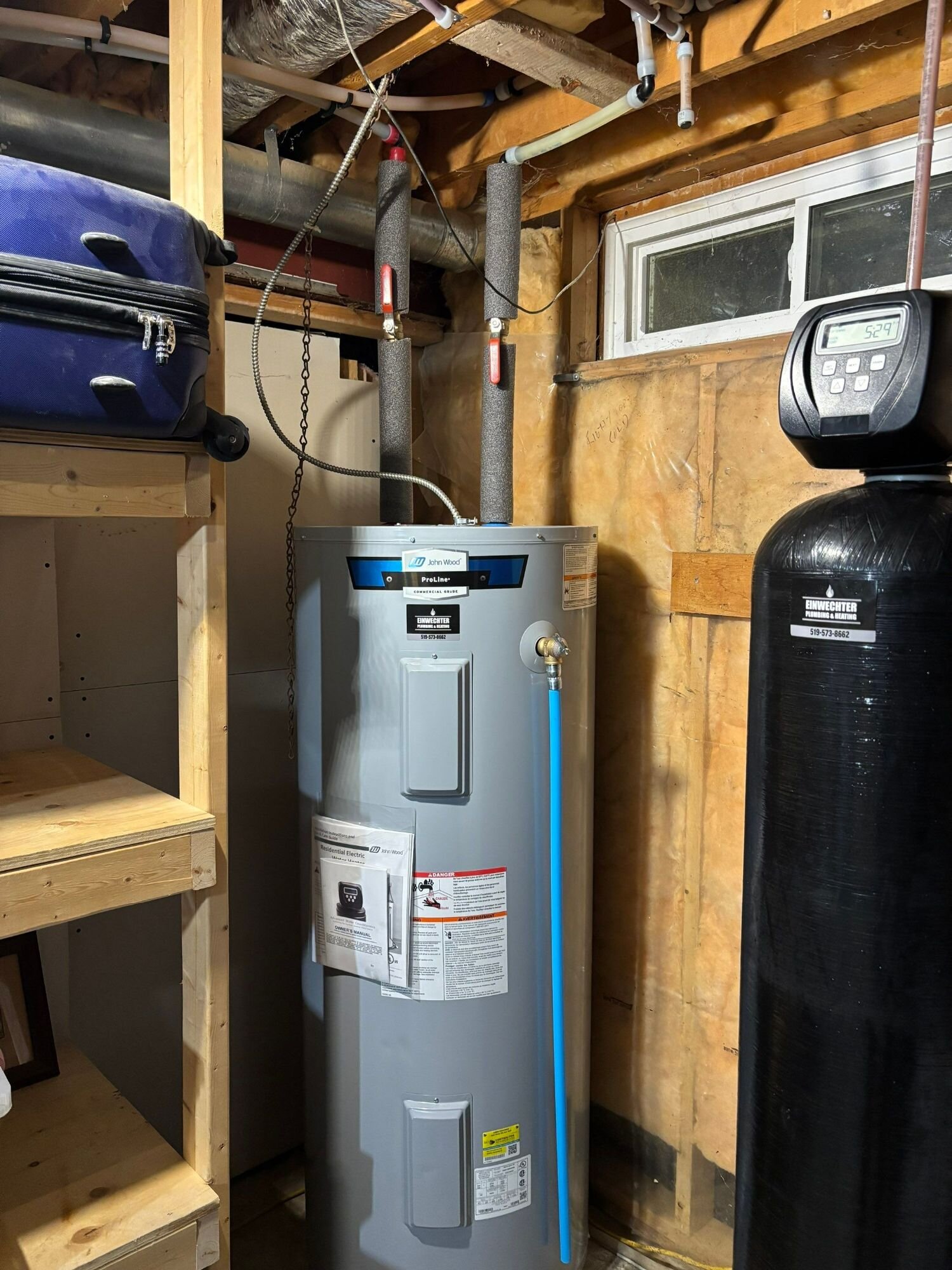
| 40 gal electric tank | About $20 | About $1,300 | About $2,200 | About $3,500 | $1,700 |
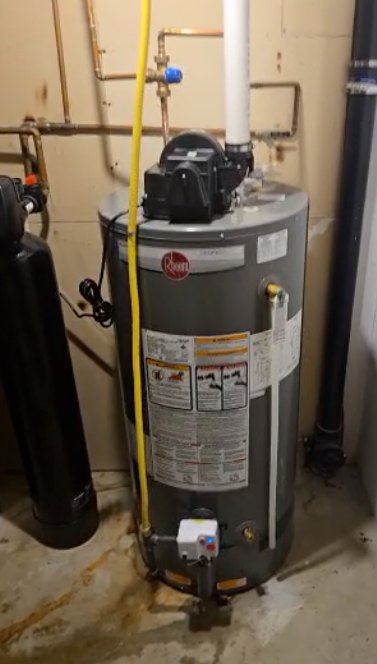
| 50 gal power-vented gas tank | About $42 | About $2,700 | About $4,600 | About $7,400 | $2,900 |
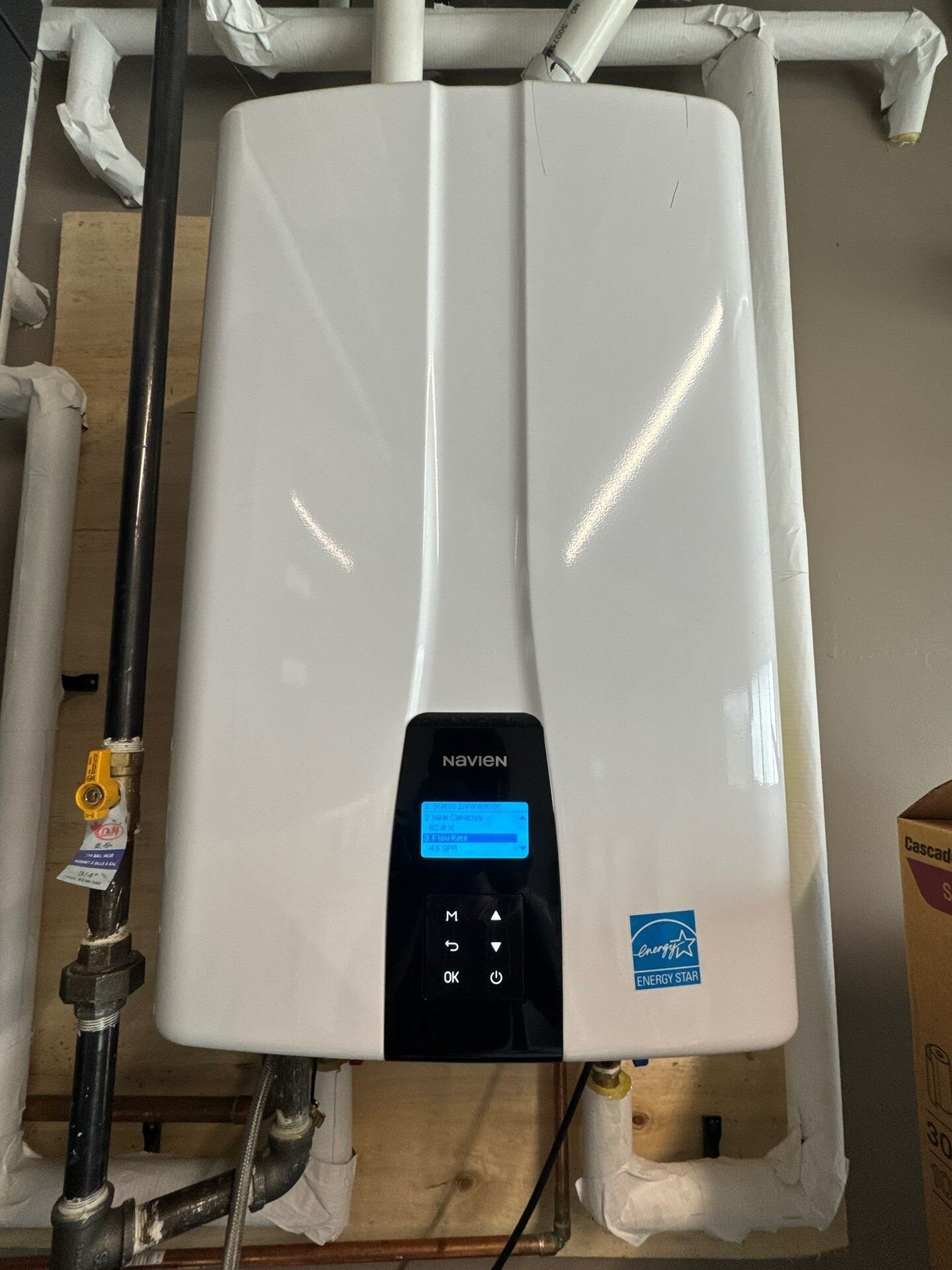
| Tankless gas, replacing a tank | About $50 | About $3,200 | About $5,400 | About $8,800 | From $4,600 |
Rents are typical starting rates published by the large Ontario rental companies in October 2026, before tax. Totals assume the rent rises 3.5% a year, in line with the yearly increases many rental contracts allow. Our prices include the unit, the installation and a new mixing valve, plus HST. See all water heater replacement prices.
Warranty options
A rental covers the tank for as long as you pay. When you own, every tank water heater we install comes with a 6-year manufacturer warranty and our 1-year labour warranty. You can extend the manufacturer warranty to 8 years for $200 or 10 years for $400, plus HST. Both include an upgraded anode rod, which slows corrosion inside the tank. The table uses a 40 gallon electric tank and a 50 gallon power-vented gas tank, installed.
| Warranty | Electric tank | Pays off | Gas tank | Pays off |
|---|---|---|---|---|
| 6 years, included | $1,700 | 6.4 yrs | $2,900 | 5.3 yrs |
| 8 years, +$200 | $1,900 | 7.1 yrs | $3,100 | 5.7 yrs |
| 10 years, +$400 | $2,100 | 7.8 yrs | $3,300 | 6 yrs |
Same rents and 3.5% yearly increases as the table above. The extended warranty is for tank water heaters and must be bought at the time of sale. It extends the manufacturer warranty only: our labour warranty stays at 1 year, so unlike a rental, labour after the first year is not included. See the pricing page.
What renting includes
A rental is not a scam, and for some homes it is the right choice. Rent normally covers repairs and replacement of the unit if it fails, so there is no surprise bill.
An honest take
We sell and install water heaters, so here is the straight version, including the cases where we would tell you to rent.
When this makes sense: You expect to sell within a few years, you can’t cover the up-front cost right now, or you want every repair handled by someone else for a fixed monthly cost.
What to ask yourself: Ask: how long will I live here, and can I pay for the unit today?
Decision: Rent, but ask for the buyout schedule in writing so you know your way out.
When this makes sense: You plan to stay 6 years or more. On the numbers above, owning has paid for itself by then, and every year after is money you keep. Add the 8 or 10 year warranty and the tank is still covered when it pays for itself.
What to ask yourself: Ask: what will the rent total over the next 10 years?
Decision: Buy. Add the extended warranty if you want the tank covered longer, protect it with a softener and an occasional service, and it should last.
When this makes sense: You can usually buy out the unit or replace it with one you own. The buyout drops as the unit ages, so an old rental is often cheap to buy out, but it is also close to the end of its life.
What to ask yourself: Ask your rental company for the current buyout amount.
Decision: If the unit is old, replacing it with your own is often the better spend.
When this makes sense: The contract normally moves with the house. Find out the monthly rate, the age of the unit and the buyout before you close.
What to ask yourself: Ask for the contract and the rental account details with your offer.
Decision: Decide early whether to keep renting, buy it out, or replace it.
How long a water heater lasts
A conventional gas or electric tank lasts 8 to 12 years on average, and a well-maintained one can reach 15. Tankless units usually last 15 to 20 years or more. Manufacturer warranties typically run 6 to 12 years, depending on the model. In our experience, what actually decides the lifespan is these four things.
What’s going on: Hard water drops minerals and sediment to the bottom of the tank, where they build up year after year.
How we know: Rumbling or popping when the burner runs, scale on taps and showerheads.
What we do: Soften the water, and flush the tank to clear what has already settled.
What’s going on: A sacrificial rod inside the tank corrodes so the steel tank doesn’t. Once it is used up, the tank starts to rust.
How we know: Rusty hot water, or a rod worn down to the wire when it is pulled.
What we do: Inspect it every 2 to 3 years and replace it when it is worn.
What’s going on: Sediment on the bottom of a tank causes overheating and stress on the seams.
How we know: Sediment in the drain water, a noisy tank, slower recovery.
What we do: Flush the tank every 6 to 12 months.
What’s going on: Venting, sizing and location decide whether a unit lasts 7 years or 13 or more. Damp spaces and unheated garages that freeze are hard on any tank.
How we know: We check venting, the size against your household, and where it sits.
What we do: Install it right the first time: proper venting, the right size, in a dry, heated space.
Hard water and water heaters
Think of a kettle in a hard water town and the white crust inside it. A water heater is a very big kettle. Waterloo Region and Guelph have some of the hardest municipal water in Ontario, and that crust forms inside the tank, on the elements and in tankless heat exchangers.
The science, in one line: calcium carbonate has inverse solubility, so it precipitates as water is heated, forming scale on heat transfer surfaces; studies have found hard water can sharply cut water heater efficiency.
Protect what you own
$1,500 + HST
Owning? Protect it.
If you own your water heater, you own the cost of scale damage too.
Softening the water stops most of the scale before it forms. It protects the tank, tankless units, dishwashers, faucets and shower valves. See water softener prices and sizes.
Tell us what you rent now and what it costs. We will give you a written price to own it.
Locally owned since 2018
Questions we get asked
Over the life of the tank, buying is usually cheaper. With typical published rents and yearly increases, owning a 40 gallon electric tank costs less than renting after about 6.5 years, and a power-vented gas tank after about 5.3 years. Tanks last 8 to 12 years on average, so most owners save. Renting can still make sense if you are moving soon or can’t pay up front.
It depends on the unit and its age. Buyouts are usually set on a schedule that drops each year, so a new rental can cost well over a thousand dollars to buy out, and a very old one much less. Ask your rental company for the current buyout amount in writing.
You can usually end it by buying out the unit, or by returning it under the contract’s terms. Some contracts charge removal or return fees. Read the contract, or call the rental company and ask for the exit options and costs in writing.
The rental company owns the old unit, so it goes back to them under the contract’s terms. Some contracts charge a removal or return fee. Einwechter Plumbing can return it on your behalf if you gather a termination agreement and an agency agreement signing Einwechter as agent. Ask the rental company how they want it returned before your new water heater goes in.
Many contracts allow a yearly increase, often tied to inflation plus a set percentage. That is why the 8 and 12 year totals are much higher than 8 or 12 years of today’s rate.
The rental usually stays with the house and transfers to the buyer. Some buyers will request the seller to buy out the contract as a condition of the sale. Buyers should ask for the contract, the monthly rate, the unit’s age and the buyout before closing.
A conventional gas or electric tank lasts 8 to 12 years on average, and a well-maintained one can reach 15. A tankless unit usually lasts 15 to 20 years or more. Manufacturer warranties typically run 6 to 12 years depending on the model. Water quality, anode rod checks, flushing and a proper installation matter more than the brand.
It can limit it. Many manufacturers exclude damage caused by scale, and some set a maximum water hardness for warranty coverage. Rental contracts may also exclude scale damage or charge more for hard water. A softener protects the unit and your coverage.
Some rental companies may require one or charge more without one, so check your contract. Some exclude covered damage from scale. Either way, a softener protects more than just the water heater. It protects your fixtures, appliances and your pipes from scale.
Ontario banned most unsolicited door-to-door contracts for water heaters in 2018. If someone shows up uninvited and pushes a new contract, you do not have to sign anything. Ontario also stopped new consumer liens (NOSIs) being registered on homes in 2024.
Owning still comes out ahead. Extending the manufacturer warranty to 10 years adds $400 plus HST, and a 40 gallon electric tank still pays for itself at about 7.8 years, while it is still under warranty, and ends about $700 ahead of renting by year 10. A power-vented gas tank pays off at about 6 years. The 8-year option is $200. Both must be bought at the time of sale.
Tankless units cost more up front but last longer and never run out of hot water. They are also the most sensitive to hard water, so plan on softening. Replacing a tank with tankless starts at $4,600 plus HST.
Water Heater Rental vs Owning
Get a written price to replace your rental with a water heater you own.
 CALL US! 548-255-2662