Einwechter Plumbing and Heating Inc. logo
Einwechter Plumbing & Heating
548-255-2662
Monday to Friday, 7am to 5pm
QR code to call Einwechter Plumbing & Heating, Kitchener-Waterloo
Scan with your phone camera to call

Basement waterproofing in Kitchener-Waterloo from the inside.

Basement waterproofing in Kitchener-Waterloo, done from the inside: we cut a trench along your basement floor, lay interior weeping tile, and carry the water to a sump pit that pumps it outside. No digging up your gardens, deck or driveway.

Interior waterproofing Priced in writing We measure your basement, then give you one written price before we start.
  • Interior weeping tile, trench drains and floor drains
  • Water goes to a sump pump with battery backup
  • One crew does the drain, pit, pump and concrete

New Dundee, Wilmot Township, Kitchener, Waterloo, Cambridge, Guelph, Milton, Halton Hills, Acton, Rockwood and Georgetown

Warning signs


Signs water isgetting in.

Water in a basement nearly always comes in at the same few places. If you see any of these, it is worth a look.

  • ✓Water along the bottom of the walls after rain or snowmelt
  • ✓Damp or dark patches where the wall meets the floor
  • ✓White, powdery staining on the concrete
  • ✓A musty smell, or mould on boxes stored against the walls
  • ✓Puddles that come back in the same spot every spring
  • ✓An older house with no sump pit, or a pit that is always full

What you get


One crew,start to finish.

One written price before we start. It covers everything below for the walls and floor areas we agree on. Time on site: about two days for a typical basement.

  • ✓Cutting and removing the concrete floor along the walls we agree on
  • ✓Interior weeping tile on a bed of clear stone
  • ✓Trench drains or floor drains where water comes up
  • ✓A new sump pit if you do not have a suitable one
  • ✓Sump pump with battery backup
  • ✓Discharge piped outside, away from the house
  • ✓New concrete over the trench, and cleanup
  • ✓Dimple board on the walls we drain, so water behind it runs down into the drain
  • ✓We guarantee our work for a year when we supply the equipment.

How it works


Catch the waterbefore it reaches the floor.

Think of it as a gutter, laid inside along the bottom of your basement walls. Water that seeps through the wall or comes up at the edge of the floor drops into the gutter and runs to one place, where a pump sends it outside.

1 Cut and dig

  • We cut the concrete floor in a strip along the walls that leak.
  • We dig a trench down beside the footing.
  • Old concrete and soil come out in bags, and we protect the rest of the basement.

2 Drain and pit

  • Perforated weeping tile goes in the trench on a bed of clear stone.
  • The pipe runs to a sump pit. If there is no pit, or it is too small or shallow, we put in a new one.
  • Where water comes up in the middle of the floor, we add a trench drain or floor drain.

3 Pump and finish

  • A sump pump with a battery backup sends the water outside.
  • The discharge runs away from the house so it does not come straight back.
  • We pour new concrete over the trench, then fill the pit with water to prove it all works.

The science in one line: groundwater pushing on the walls and floor (hydrostatic pressure) takes the easiest path. A perforated drain at the footing gives it an easier path than your floor joint, and the sump pump lifts it out.

Why it happens


Why your basementtakes on water.

We fix the reason, not just the puddle. Here is what we usually find, how we check, and what fixes it.

1 Old or missing weeping tile

  • What is going on: older homes often have clay tile outside the footing that has crushed or filled with silt, or none at all.
  • How we know: water comes in all along the joint where the wall meets the floor after rain or snowmelt.
  • What we do: interior weeping tile along the leaking walls, run to a sump pit.

2 Water rising under the floor

  • What is going on: a high water table pushes up through cracks and the floor joint.
  • How we know: water appears away from the walls, or in the same spot every spring.
  • What we do: a trench drain or floor drain at that spot, tied into the interior drain.

3 Nowhere for the water to go

  • What is going on: no sump pit, a pit too shallow or too small for the float, or a pump with no backup.
  • How we know: we look at the pit, the float and where the discharge ends up.
  • What we do: a new, deeper sump pit with a pump and battery backup: $2,400 plus HST for a new pit and pump.

4 Water coming down outside

  • What is going on: downspouts that dump next to the wall, or ground that slopes toward the house.
  • How we know: the leak lines up with a downspout or a low spot outside.
  • What we do: we tell you. Sometimes extending a downspout or fixing the grade is all you need.

Recent work


From a recent interior waterproofing job

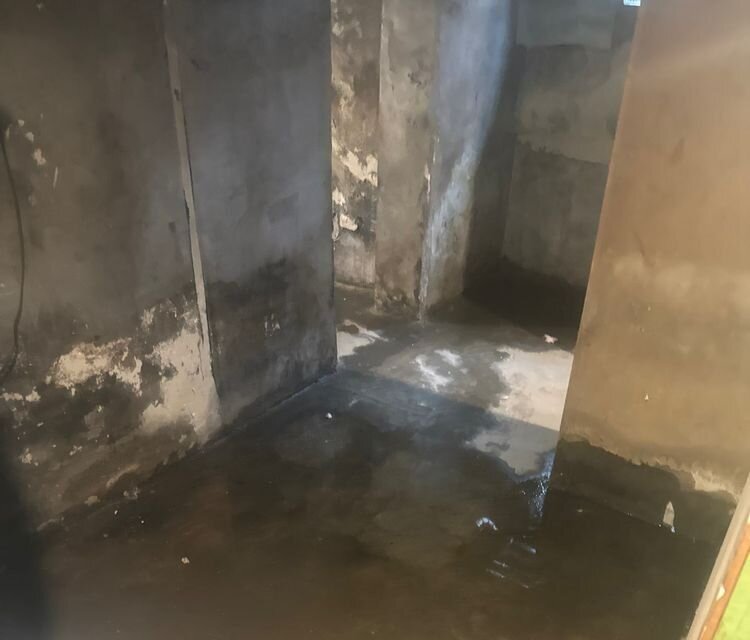
Interior basement waterproofing in Waterloo: water across the floor after rain.
Before. Water across the floor after rain.
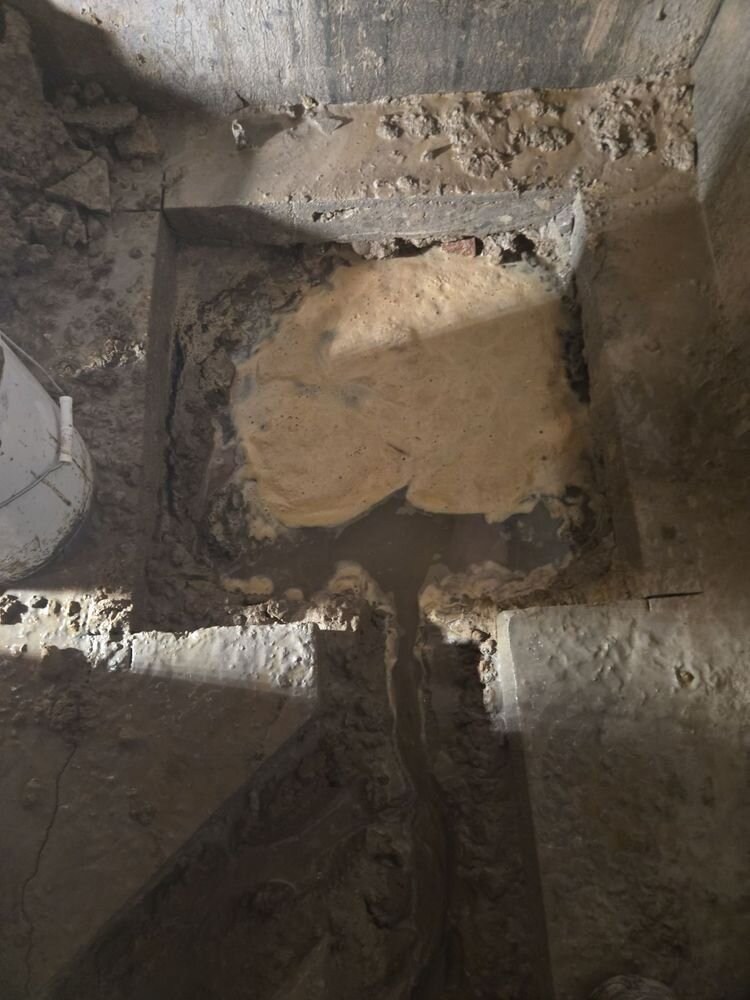
Interior basement waterproofing in Waterloo: floor cut along the wall and dug to a new pit.
Trench and pit. Floor cut along the wall and dug to a new pit.
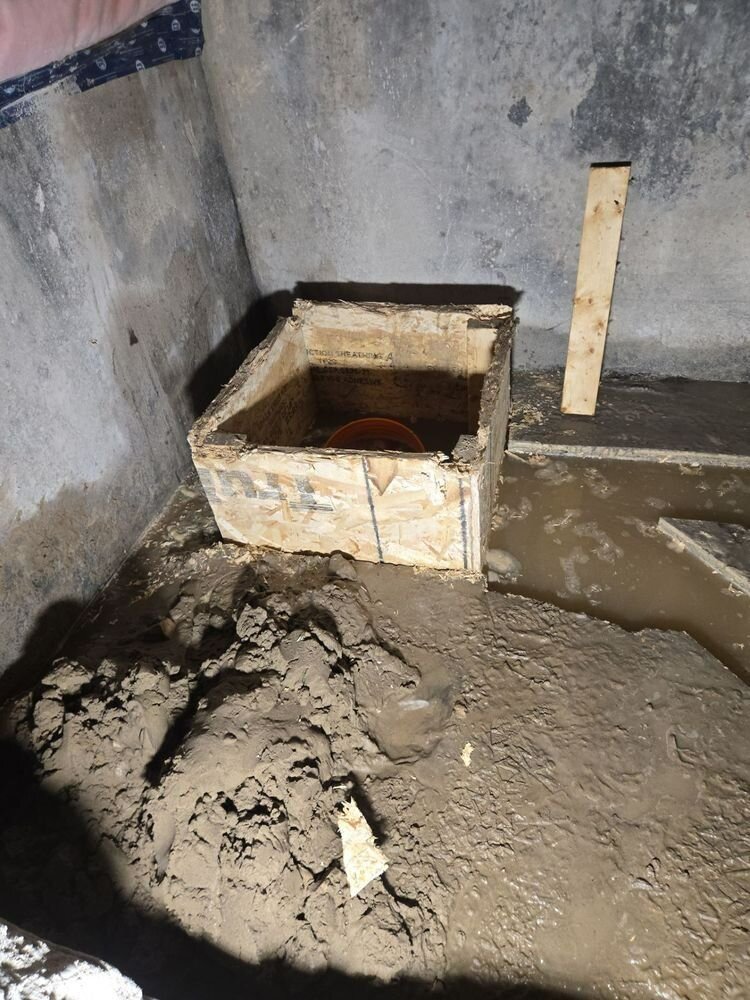
Interior basement waterproofing in Waterloo: pit formed and set before the concrete.
New pit. Pit formed and set before the concrete.
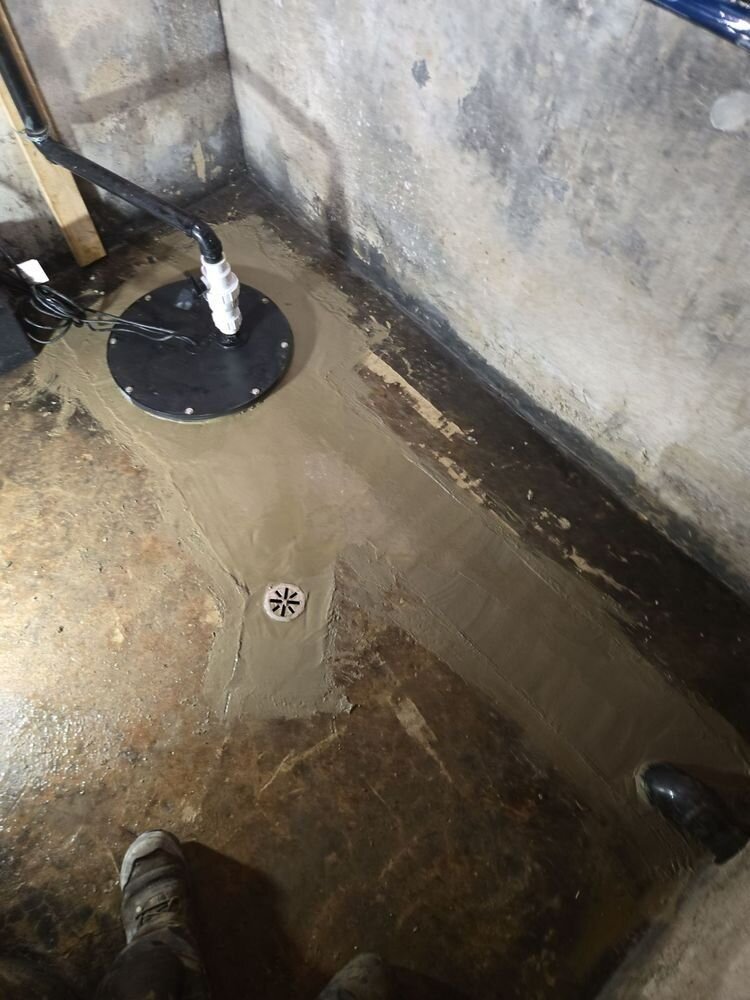
Interior basement waterproofing in Waterloo: pit lid, new concrete and a floor drain.
Finished floor. Pit lid, new concrete and a floor drain.
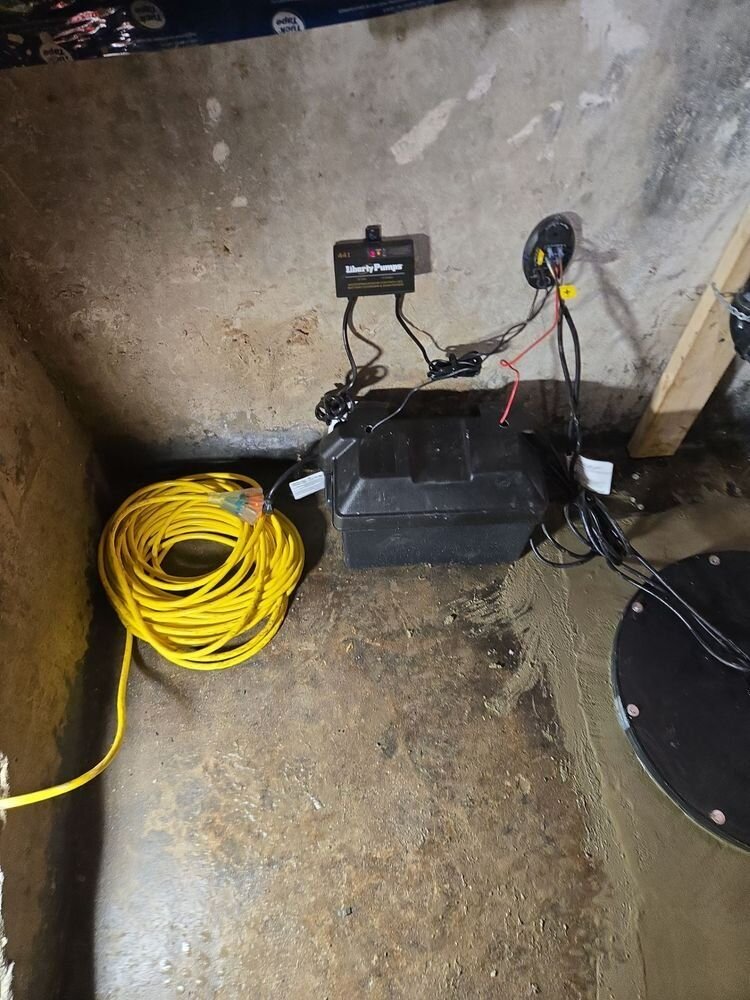
Interior basement waterproofing in Waterloo: sump pump with a battery backup.
Pump and backup. Sump pump with a battery backup.
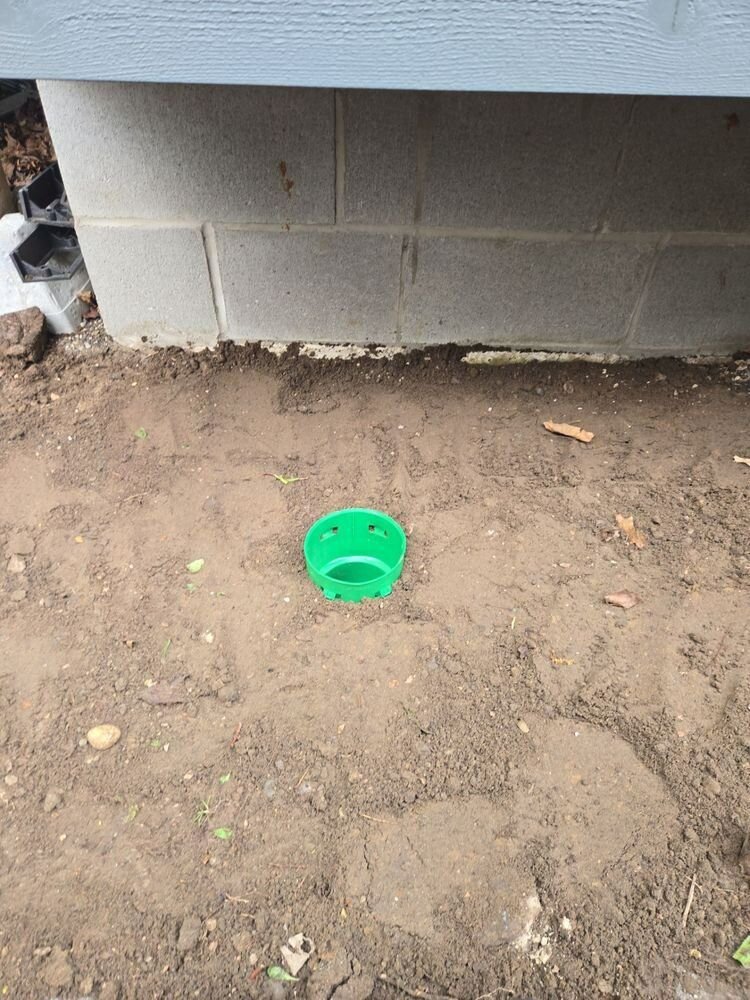
Interior basement waterproofing in Waterloo: discharge carried away from the wall.
Outside. Discharge carried away from the wall.

Photos from an interior waterproofing job in an older Waterloo home.

Questions we get asked

Basement waterproofing FAQ

How much does interior basement waterproofing cost?

It depends on how many feet of wall need a drain, whether you already have a sump pit that is deep and wide enough, and what is in the way, like finished walls or flooring. We measure your basement and give you one written price before we start, so there are no surprises. A new pit with a pump is $2,400 plus HST on its own; the drain work is priced per job.

Is interior waterproofing as good as exterior?

They work differently. Exterior work keeps water off the outside of the wall, but it means digging up gardens, decks, walkways and sometimes a driveway. Interior waterproofing lets water reach the footing and carries it away under your floor before it reaches you. For most homes it is less disruptive and costs less. We only do interior work.

Do I need a sump pump?

Yes. An interior drain needs somewhere to send the water. If your existing pit is deep and wide enough for the float to work properly, we use it. If not, we put in a new, deeper pit. We always recommend a sump pump with a battery backup, because heavy rain and power outages often come together.

How long does the job take?

Most of the time goes into cutting and digging, then letting the new concrete set. A typical basement takes about two days on site. We tell you the schedule in writing before we start.

How messy is it?

Cutting concrete makes dust and noise. We bag the debris and take it away, We wet-cut the concrete, which keeps the dust down, and we can tarp off the work area or set up ventilation. You will need to clear about four feet along the walls we are working on.

Do I need a permit?

A new sump pit, sump pump and floor drains are plumbing work, and plumbing work in Ontario usually needs a permit. Rules vary by city, so we check with your building department before we start and pull the permit when one is required.

Will it stop water coming through cracks in the wall?

Water that comes through a wall crack runs down behind the dimple board to the floor, where the interior drain catches it. We do not do crack injection. If a crack is letting in a lot of water, we will tell you.

Can you do it if my basement is finished?

We need to reach the bottom of the walls. That usually means opening the drywall and flooring along the walls we drain. That part is done by another trade, and if you want the whole job handled by us, we can coordinate the other trades for you.

Where does the water go?

The sump pump pushes it outside through a discharge pipe, away from your foundation, so it does not soak back in. We check where it ends up before we finish.

Is there a warranty?

We guarantee our work for a year when we supply the equipment. We pick brands we trust, and that is what lets us stand behind them.

Should I add a backwater valve too?

If sewer backup is also a worry, a backwater valve stops sewage from coming back up your floor drain. It is a separate job, and it is easiest to do while the floor is already open. Ask us about both together.

Interior basement waterproofing

Tired of a wet basement?Let's fix the reason.

Call or book a visit. We look at where the water comes in, then give you one written price before we start.